
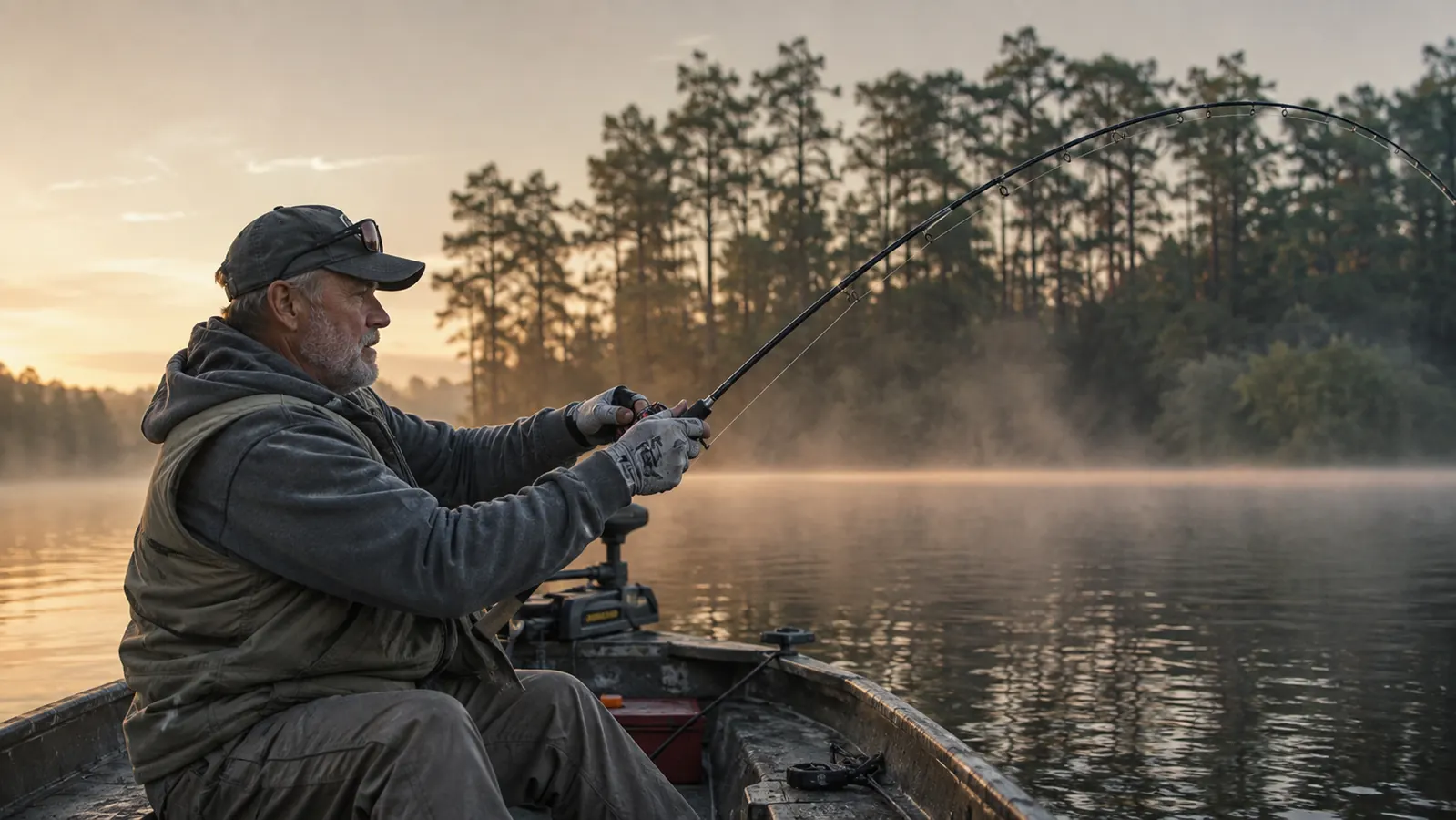
Hands are the first thing that quit on me on the water. I'm 64, and I've spent forty-some years fishing everything from farm ponds to a borrowed johnboat on the river. These days I can plan a full day of casting like anyone else. The difference is what happens around lunch: somewhere past the hundredth cast my right hand starts to knot up, my fingers curl, and by two o'clock I'm holding the rod with the heel of my palm because my grip keeps losing ground. I tried switching hands every ten minutes. I tried wrapping the rod handle with foam. I tried the rubber squeeze ball my wife keeps by the recliner, which helped my hand exactly until I left it at home.
What actually stretched my days out to sundown was a pair of fingerless compression gloves from Copper Compression. Not the gloves alone, and I'll be straight about that, but the gloves plus a routine I put together over a full season of fishing. This is that routine, step by step, in the order I'd work through it if your hands are the part of you that gives out first. I've also flagged where to save yourself the trial and error, because I made most of the mistakes so you don't have to.
A Full Day on the Water Starts With Fit and Timing
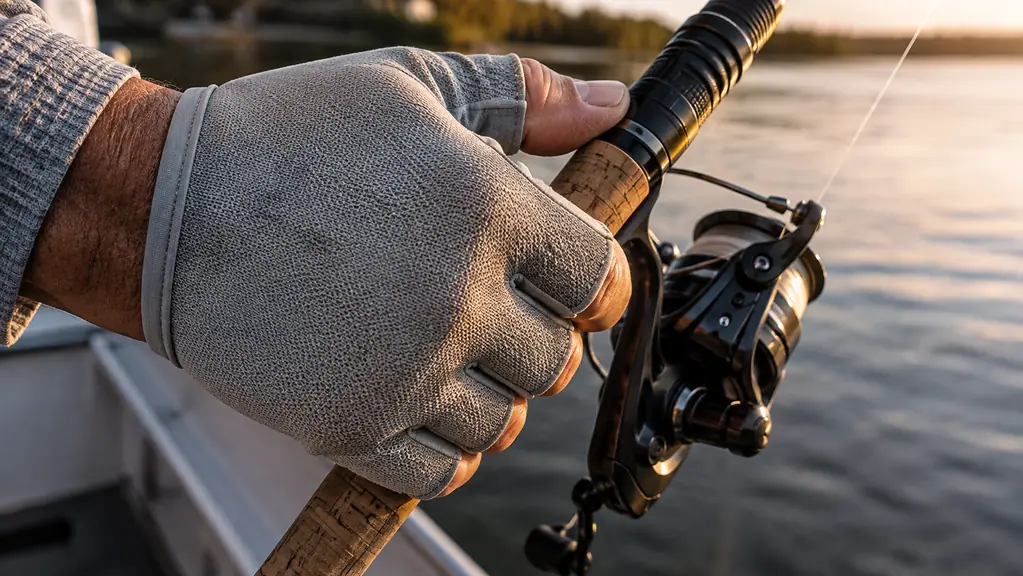
The fingerless compression gloves from Copper Compression are the pair that holds my hand and wrist snug through a full day of casting while leaving my fingertips free for knots and bait. They're the piece the whole routine below hangs on.
Amazon Check Today's Price on Amazon →My Routine, From First Light to Last Cast
I'm not a doctor and I won't pretend to be one here. I'm a guy who kept a notebook on a boat seat for a summer, and this is what I learned about getting a full day out of aching hands, in the order I actually do it.
Step 1: Warm the Hands Before the Gloves Go On
Compression gloves do more when your hands are already warm and loose the minute you put them on. If you pull them on with cold, stiff hands at 5:40 in the morning, you're compressing a hand that hasn't woken up yet, and the whole day starts on the back foot.
So the gloves go on at the tailgate, after the first cup of coffee. On a cool May morning I'd stand over the open tailgate and flex my fingers open and closed while the truck warmed up. My rule became simple: when my fingers bend all the way without a hitch, that's the cue for the gloves. On the boat it means tucking them in a shirt pocket, or leaving them on the console where the sun hits, while I rig the rods first.
A cold morning on the river taught me this the hard way. One day I put the gloves on in the dark while the coffee was still dripping, loaded the boat, and by the time I set up my first rod my hands were already stiff under the compression. I fished forty minutes, stripped the gloves off, and sat on the cooler flexing until my fingers came back. That was the last time I put them on before my hands were ready.
Step 2: Get the Fit Right Before You Fish, Not After
Fit is the whole ballgame, and it's the step everybody gets wrong. A compression glove should be snug, like a good pair of waders, but it should never leave red lines on your wrist after an hour. If it does, it's too tight, and it will make your hands ache worse by the end of the day than no glove at all. If it twists on your palm every time you cast, it's too loose, and it isn't actually supporting anything.
I wear a medium in the Copper Compression gloves. I started with a large because I figured glove sizes run small, and it slid around on my palm and drove me crazy. The medium is snug across my palm, holds still through a full cast, and my fingertips stay completely free for tying a clinch knot or threading a minnow. Measure around your palm at its widest point before you order and don't guess.
One more sizing tip, and it's backwards from most gear advice, so it's worth writing on a sticky note. If you're between sizes, err snug on the gloves and loose on the waders. A glove that fits like a handshake is right. A glove that fits like a vice grip is wrong no matter what the package claims.
Step 3: Let the Glove Carry the Grip, Not Your Fingertips
The compression does you no good if you still grip the rod with your fingertips. That's the grip that wears a hand out, because it recruits all the little muscles that knot up by noon. The way I hold a rod now, the palm and the heel of the hand drive the grip and the fingertips just steer. The glove holds the handle against me, so my fingers get to rest.
My fishing buddy Ed noticed the difference before I did. He said I was holding the rod like a hammer handle instead of squeezing it. When I switched to a deep, full-palm grip, my midday hand checks, where I'd stop and shake my hand out, dropped from a dozen a trip to two. Same rod, same reel, same fish. Just a grip my hand can keep up with.
It helps to practice this on a rod you don't care about before you try it on a hot bite. Stand in the yard and cast a practice plug fifty times while you concentrate on keeping your fingertips soft and letting your palm do the work. By the time the real fish are biting, the grip is already a habit.
Step 4: Take the Break the Glove Can't Take for You
Here's the honest part. The glove is a tool, not a cure. It does not fix arthritis, and it will not let you grip a rod flat-out for nine hours. What it does is stretch the time your hands hold up, and you have to spend that extra time wisely by taking real breaks.
My rule became: every net job, every lure change, every sandwich, the gloves come off. Five minutes with the hands free, fingers flexing, a good shake, and back on. I worked out a rhythm on the boat, gloves on for the casting, gloves off at every natural pause. It sounds fiddly, but it's the difference between a day that ends at noon and one that ends when the light goes.
I'll add the part that sounds unrelated and isn't: water. I started keeping a half-gallon jug within arm's reach on the boat, and the three o'clock hand cramps backed way off. A tired, dehydrated grip and a bent hook will both cost you fish, but only one of them is in your control.
Step 5: End the Day the Way You Want Tomorrow to Start
The gloves are only as good as the condition they're in on the next trip. A glove that's stretched out, stiff from sweat, or rolled up in a gear bag for a week is not going to do the same job. This is the part I was lazy about, and I paid for it with one rough morning on the river.
After a day on the water I rinse the Copper Compression gloves in cool water and lay them flat to air dry. I don't wring them, I don't machine wash them, and I hang them somewhere they'll keep their shape, next to my reels. Fifteen minutes at the end of the day buys me a glove that fits exactly the same on trip forty as it did on trip one.
And keep a spare pair in the truck. I learned that the hard way the morning I got to the ramp and realized the gloves were on the kitchen counter with my wallet. A second pair in the console means a forgotten pair is an inconvenience instead of a blown day.
What Else Helps
The gloves were the keystone, but they weren't the whole arch. A rod with a larger-diameter grip is easier on aging hands than a skinny cork handle, because the muscles don't have to work as hard to hold on. A rod holder on the boat means you're not gripping anything between casts. And a warm shower or a heating pad on the forearms before a morning trip matters more than you'd think, because loose forearms make for loose hands.
I'll say one more time, because it's the advice nobody wants: the rod matters more than the glove. The days I fish my lighter spinning combo, I barely think about my hands. The days I bring the heavy rig, the gloves are working overtime by mid-afternoon. Buy the gloves, but also give yourself the lightest rod that'll do the job. Your hands will vote for it every time.
This is also the part that should make you feel better about your gear bag, because none of it is exotic. No creams, no twice-a-week sessions with a specialist. Just five minutes of forethought and one pair of gloves that do what they're supposed to do.
What About the Hot Afternoons
Summer afternoons are where this routine earns its keep and where it shows its limit. On a still, ninety-degree day the gloves trap heat on my palms, and there's no pretending they don't. What I settled on was a simple deal with myself: gloves on through the morning bite and the evening bite, gloves off for the slow middle hours when the fish aren't hitting anyway. The compression gets me the two windows that matter, and my hands stay cool through the dead stretch.
The Honest Part: What the Gloves Won't Do
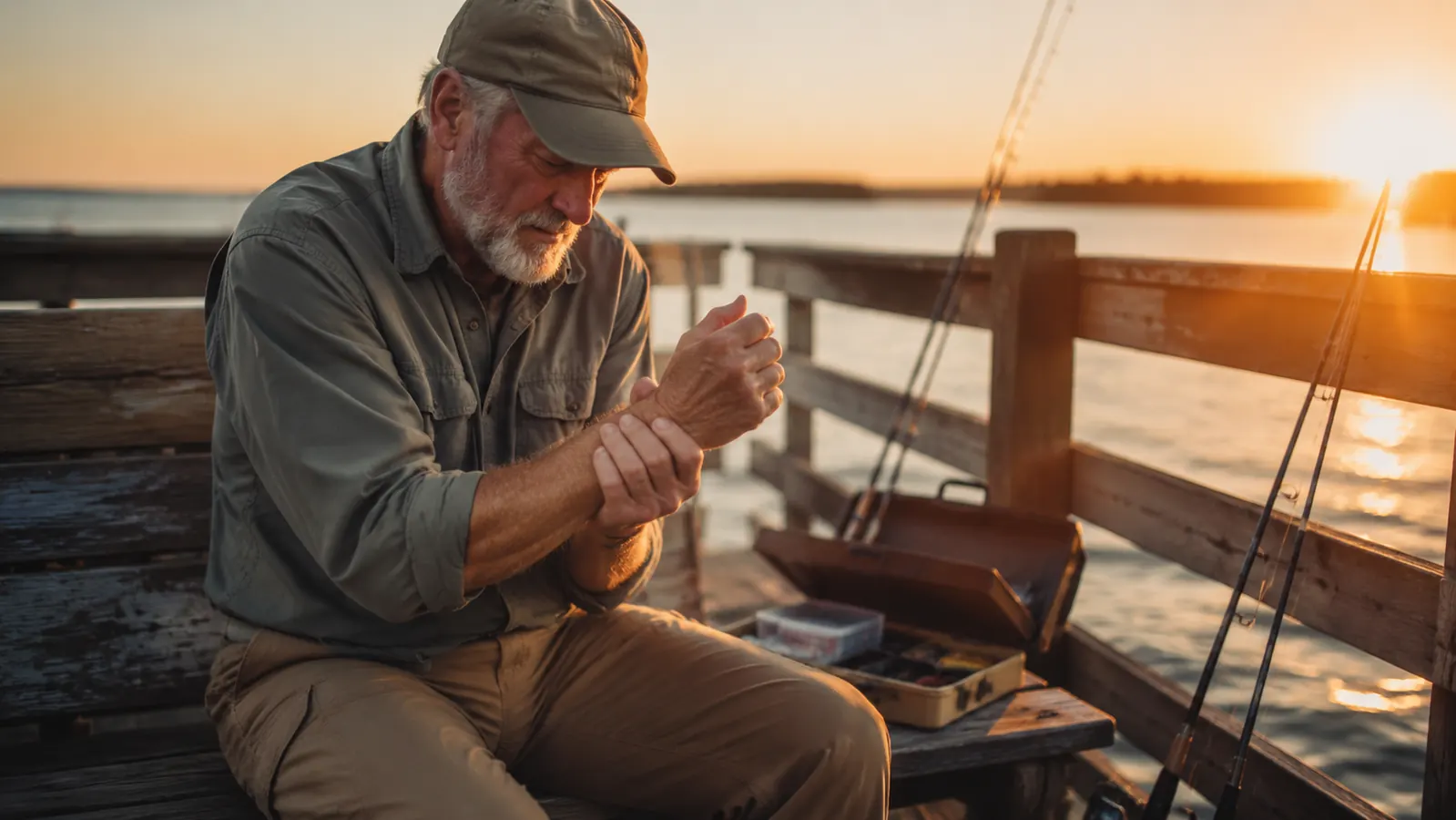
You bought a fishing story, so here's the bait-shop truth I owe you under the counter. Copper Compression gloves are not magic. There is copper in the fabric, and I'm not going to sell you on what it does, because I don't know that it does anything. What I know works is the compression holding my hand and wrist snug, plus the warmth that builds up over a cast. Both of those are real, and both are doing the heavy lifting. Ignore anyone who promises more.
They won't feel perfect on day one, either. The snugness takes some getting used to, and on a hot, still afternoon the gloves run warm on my palms. Most mornings that's a trade I'm happy to make. A couple of August afternoons I pulled them off for the last hour, and I paid for it at dinner. If your hands are as stubborn as mine, that's a trade you'll be happy to make too.
The summer I kept this whole routine, I fished 40 days between ice-out and August. I missed exactly one because of my hands, and that was the day I left the gloves on the kitchen counter.
The Bottom Line
Here's my bottom line, and it's the same thing I'd tell you standing at the bait shop counter. If your hands are what's keeping you off the water, get the gloves, get the fit right, warm up before you put them on, take real breaks, and spend five minutes on them at the end of the day. That's the whole system, and none of it is fancy. It's one pair of gloves with five small habits stacked on top. I fished more this year than I have in a decade, and I give my hands more of the credit than my back, my knees, or anything else.
One Pair of Gloves, a Full Season on the Water
The Copper Compression gloves are the pair I've worn for two seasons, and they're the piece this whole routine hangs on. If your hands are the first thing to quit on you, start here, work the steps in order, and give it a month.
Amazon Check Today's Price on Amazon →