
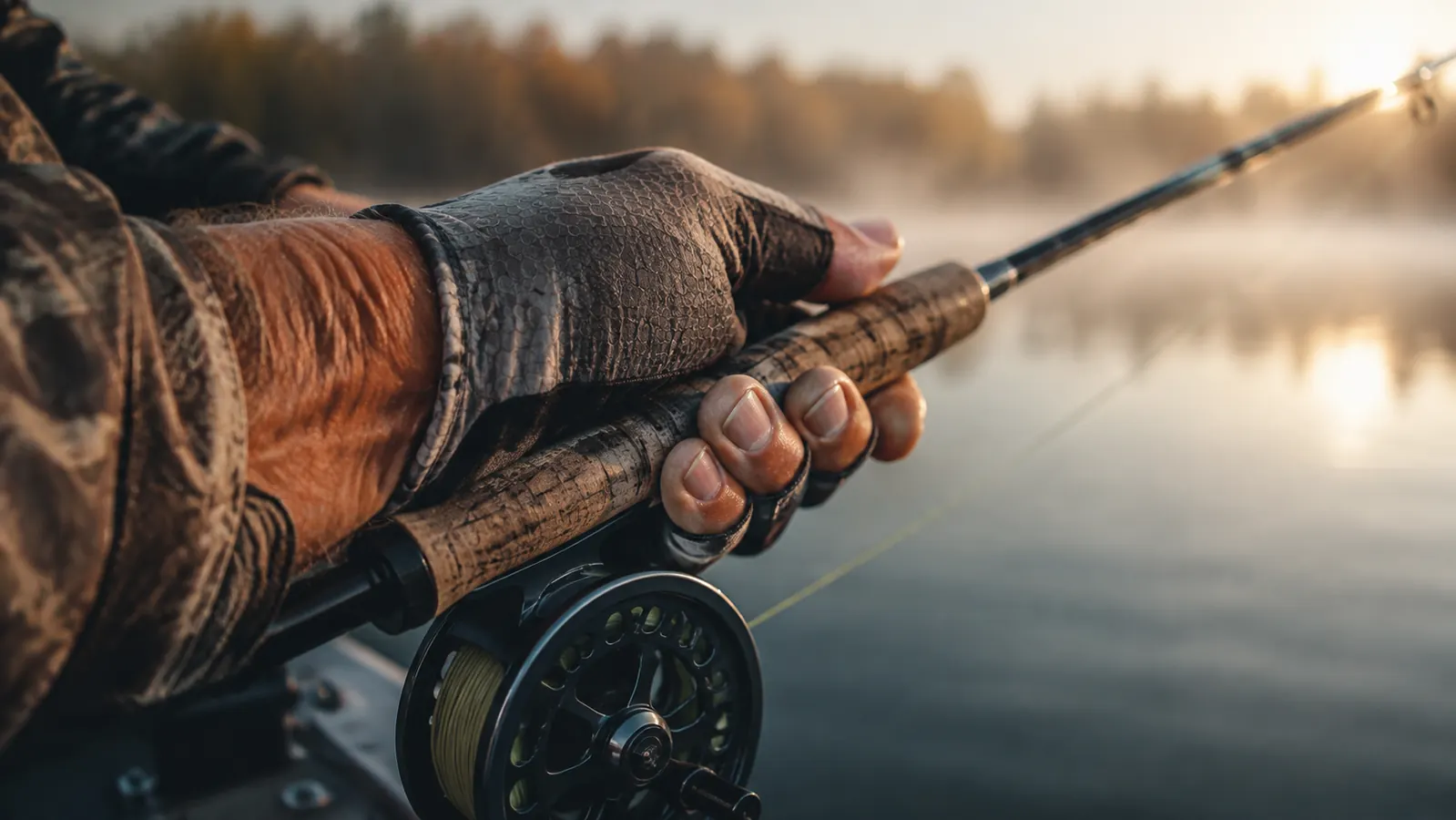
Years of cold mornings on the river went straight into my casting hand. Around my late fifties I started waking up with fingers that did not want to open all the way, and a right hand that griped at me for about the first hour of the day. Some mornings it was just a dull complaint, the way you notice every stair you have gone down in your life. Other mornings I had to work the fingers open like I was cracking a stiff buck knife. I tried the gloves you pull on for hunting, but they were too thick to feel anything through, and I tried the rubs and the creams that make your whole kitchen smell like a pharmacy on fire. All of it took the edge off for twenty minutes, if that. Then a buddy who retired and ties flies for a living told me about compression gloves, and the conversation over coffee got a lot more useful.
So I bought a pair of Copper Compression arthritis gloves, wore them through a full season of casting, reeling, wading and hauling gear up and down the boat ramp, and now I am giving you the honest review. I will tell you what they actually did for me, where the copper promise is mostly marketing music, what I noticed in the very first week versus a full season later, and whether a tired old casting hand is worth the price of admission. Because there are twenty versions of this glove on the shelf now, and most of the reviews read like they were written by the same hand that wrote the box.
The Quick Verdict
The gentle compression and the warmth carried me through a full morning of casting and a long day of reeling. The copper itself probably does precious little, but the glove works all the same.
Amazon Check Today's Price →If your casting hand aches before the sun does, a pair of compression gloves beats another tube of cream.
Copper Compression makes a fingerless glove that lets you feel your line while it keeps your knuckles warm and your grip soft. Check today's price before you settle for a warmed-up tube.
Amazon Check Today's Price on Amazon →How I've Used Them
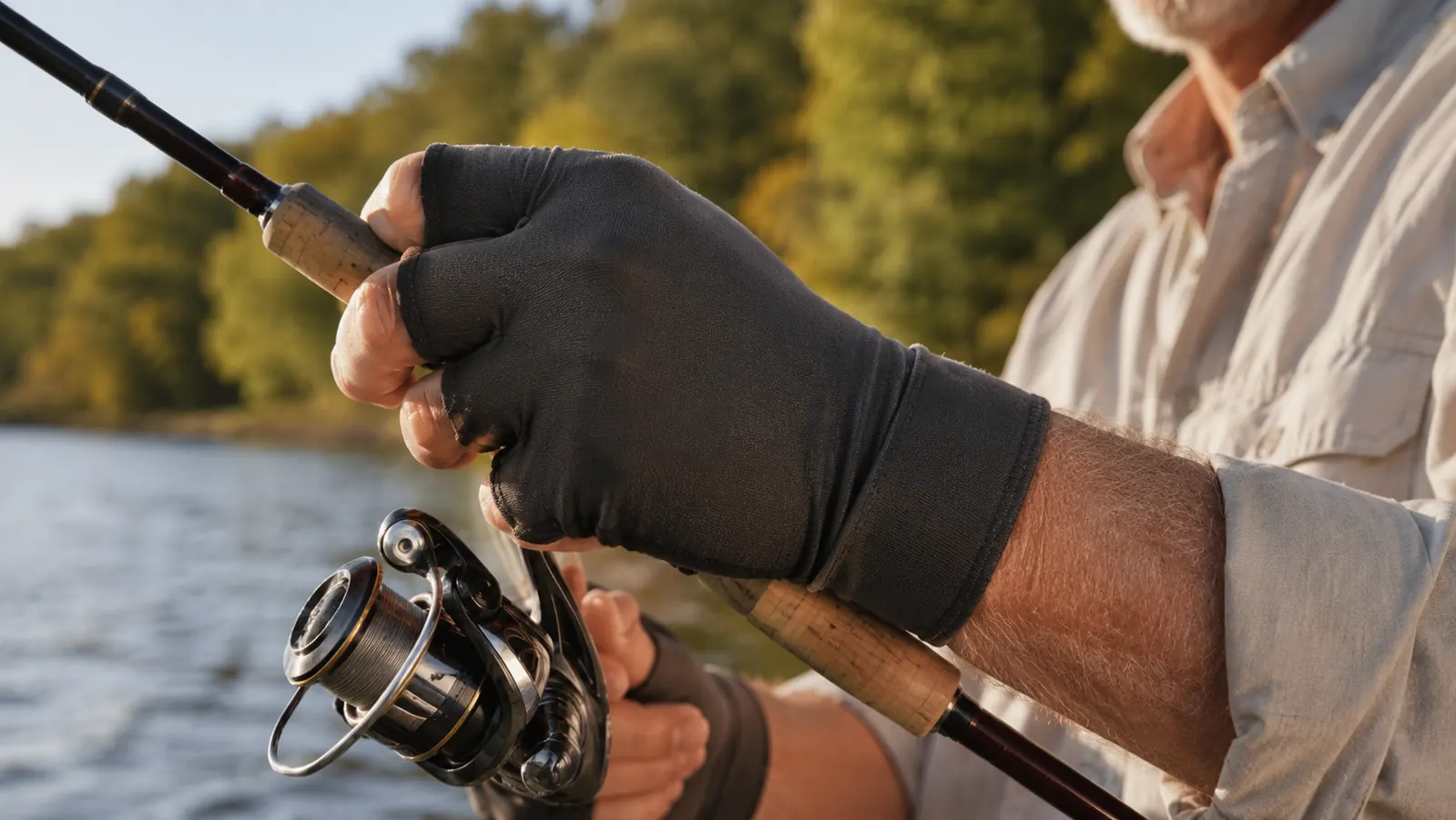
Here is the honest thing to tell you up front: I wear a single glove, on my casting hand, not both. Two gloves and I cannot tie a knot, reach into my vest for a split shot, or work a hook off a lip without swearing something my grandkids should not hear. That is the whole point of the fingerless design. Your fingertips stay bare, so you keep your feel. My casting hand is the one doing all the work, the one that grips the rod on a thousand casts, the one that fights the fish, the one that has spent forty years wrapping around rod handles, tree saws, and the butt of a canoe. That hand earns the glove.
I used them three different ways across the season. First, on the boat in the pre-dawn cold, when my hands were asleep and stiff and my casts were going every which way until the fog burned off. Second, on long wading days, walking a stretch of river in water cold enough that my fingers would go thick and clumsy by hour three, the way a hand does when you have been holding a rod over water for a long while. Third, when I was not fishing at all, doing camp chores and loading the truck, and my grip would just give out earlier than my legs wanted it to.
The stiffness I carry out of bed is the thing the glove actually touches, more than anything else I have tried. Fifteen minutes into wearing it, my fingers open and close without the first-few-laps complaint. It is not that the joints stopped hurting. It is that the glove keeps that hand warm and gives it a gentle, even squeeze, and a warm hand that is being held lightly works a lot longer than a cold, fisted one. That little bit of heat plus a snug hug did more for me over the season than any rub in a jar, and I ran through a lot of rubs in jars.
What the Compression Actually Does
Let me be plain about the mechanism, the way a guy would explain it across a dock rail. The glove is snug, not tight, and that even pressure takes a little of the load off a tired hand, the same way my knee sleeve takes some load off a tired knee on the steep trails. It keeps the joints warm, and warmth alone loosens the morning stiffness, same reason you run your hands under hot water before you go out in the cold. For a hand that has spent decades gripping a rod handle and a mule of hauled gear, some mornings the whole difference between an easy open hand and a cranky one is just keeping that hand warm while it rests.
The second thing the compression did was calm that deep, achy fatigue that builds in the palm and the base of the thumb after a long wading day. It is not a massage, and it is not a cure. But that even pressure seems to tell the tired muscles to relax instead of clench up. By the end of the season I noticed my casting hand was able to hold a rod steady for longer without that creeping tightness that makes you want to set the rod down early. That is the whole game for me. I am not chasing pain-free. I am chasing more hours on the water before the hand taps out.
The copper talk is mostly a bumper sticker. The value is the even squeeze and the warmth, and those are real.
Where the Copper Claim Falls Short
Now the part I have to be straight with you about. Brand a glove 'copper' and a guy on a fishing forum will tell you the metal pulls some kind of mysterious magic out of your knuckles, that it soaks in overnight and rebuilds your joints like it is free labor. I cannot confirm any of that, and neither can the box, and neither can any study I found that actually made me believe it. Copper in the body is a real thing, you need copper, but rubbing it against the outside of your hand and hoping it works like a charm is a very old idea and a very thin one.
Here is what I concluded after a full season. The glove would have helped my hand exactly the same if the weave were plain cotton dyed a boring color, because the thing doing the work is the warm, even pressure, not the color in the fabric. If you are buying these gloves because you believe the copper is going to fix your arthritis, I would rather you saved your money and spent it on a warm pair of mittens instead, because that warmth is the real mechanism and it got my hands open just fine. I am not telling you to leave the copper on the shelf. I am telling you what carried the load for me, and it was not the metal.
And I want to say something about expectation, because nobody warns you about this. Compression gloves are not going to cure arthritis, and they are not going to stop the bone-on-bone grinding truth that decades of casting leave behind. What they do is keep you out there longer, which for a guy my age is the whole ballgame. If you go in expecting a magic wand you will be disappointed. If you go in expecting a warm, snug glove that keeps a tired hand in the game, you will get exactly what you paid for.
Sizing, Fit, and How They Hold Up
Sizing is the biggest trap with these, bigger than any copper claim. The pair is sold by size, small through extra large, and between a medium and a large is the whole difference between a glove that works and one that just wrinkles around your wrist like a cheap sock. My casting hand runs a touch wide from years of gripping, so I sized up, and it fits like a good worn glove: snug enough to hold, never tight enough to pinch. If it feels like a tourniquet, you bought the wrong size, and a too-tight compression glove will do the opposite of helping, it will make the ache worse by cutting off the easy flow. Measure first.
The fit detail that surprised me is how well the fingerless tips sit. Some cheap gloves leave the tips flapping like the ends of a torn sock, but these come down cleanly between the first knuckles, so the glove stays put while your fingertips stay fully bare. That means I can feel my line pull, I can tie a knot, I can open my tackle box, all without fighting the glove. It stays in place through a full day of casting without bunching up between your fingers, which is the kind of thing you only notice when it is missing.
After a full season, including washing them more times than I counted, the fabric kept its shape and the knit stayed even. No runs along the seams, no stretched-out palm that turned them into a bag. They came through wading water, sweat, sunscreen-and-grip residue, all without turning stiff or shrinking on me. I do not think these are buy-it-for-life gear. Any knit glove is going to wear out eventually, and a season is a season. But they are a tough glove for the money, and they are built well enough that I would buy another pair when this one finally gives up the ghost.
The Daily Tradeoffs Worth Knowing
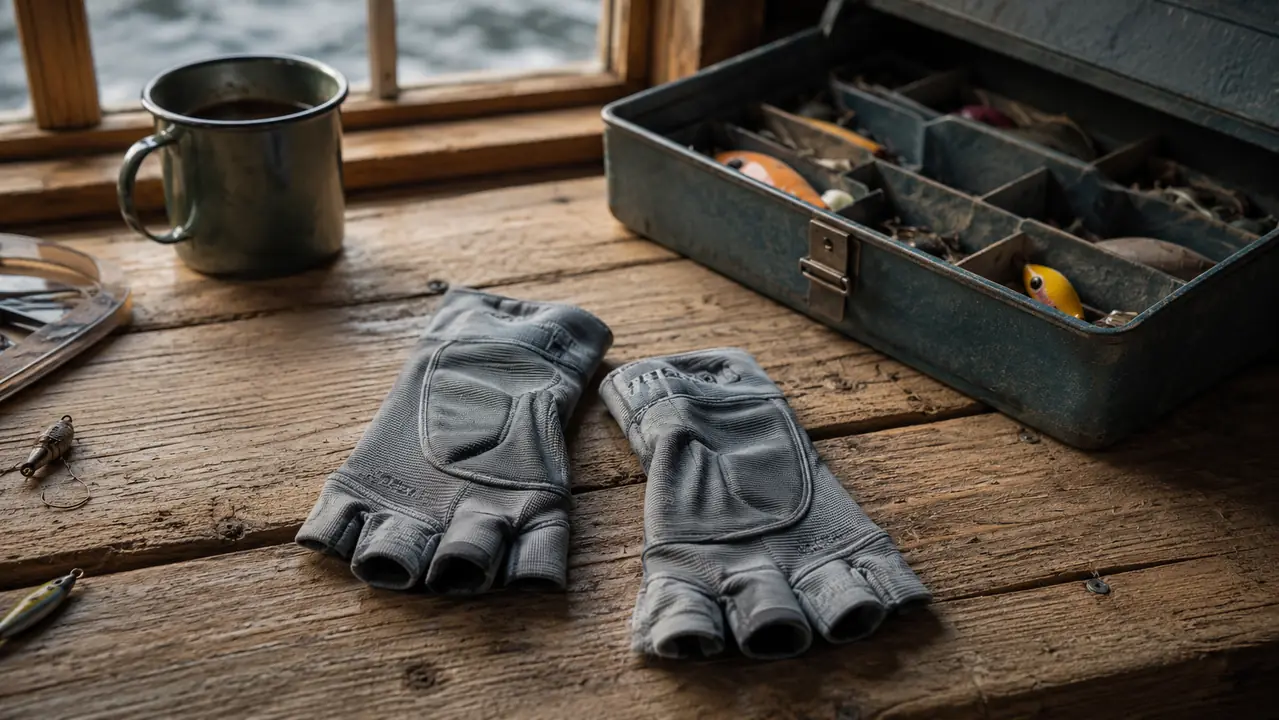
For the honest record, here are the things I did not love, and you deserve to hear them from somebody who wore these all season and not somebody paid to advertise. They are not waterproof. They are a dry-hands glove, reach for them on cold mornings and keep them out of the pour when the rain sets in, because once they soak through they get cold and heavy and you will take them off at the first stop. Two gloves at once makes fine work fiddly, which is why I settled on one, and if you need both hands gloved at once, keep your knot work simple. And the wrist is a plain knit band, comfortable enough but nothing that will win you any awards at the campfire.
There is also the matter of the copper itself being a marketing story, which I already told you about, and I want you to know I am telling you before you hand over money, not after. I wish manufacturers would just say 'these are warm snug gloves that help your grip' and drop the miracle metal talk, because a glove that is honest about what it does would sell fine on that alone. I liked the glove in spite of the copper claims, not because of them, and I think you will like it the same way if you buy it for the right reasons.
What I Liked
- Took the edge off my early-morning hand stiffness within about fifteen minutes
- Fingerless tips let me feel my line, run the reel, and tie a knot with bare fingertips
- Even, snug compression plus warmth shortened recovery after long wading days
- Held their shape and stayed even through a full season and plenty of washing
- One glove on the casting hand was enough to make a real, repeatable difference
Where It Falls Short
- The copper promise is mostly marketing; the warm, even squeeze does the work, not the metal
- Not waterproof, and next to useless in a soaking rain
- Two gloves at once make knot work and small hands-on jobs fiddly
- Buying the wrong size turns the compression into a sore-making tourniquet
- It eases stiffness and fatigue, it does not and cannot fix arthritis itself
Who This Is For
These are for the guy who has tired, often stiff hands, and who wants to stay on the water or in the woods longer, not for the guy who wants a cure for arthritis, because there is no such cure and no glove on earth sells one. If your grip gives out before your legs do, if cold mornings leave your fingers slow to wake up, if you want one hand you can cast with and trust through a long day, a single Copper Compression glove is a cheap, honest fix. It earned a permanent spot in my day pack, right next to the thermos.
Who Should Skip It
Skip them if your hands are fine and your fingers open easy at the first light, because you do not need the help and the glove will not add anything except a thing to wash. Skip them if you need something to keep your hands warm in the bucketing rain, because these will soak through fast and leave you worse off than with nothing. And honestly, skip them if you are buying them for the copper, because the copper is not the thing carrying the load and you will be disappointed in the metal. If you want a glove that makes a tired grip last longer, these are solid. If you want a miracle, save your money and drink another cup of coffee.
Here is my honest bottom line, the one I wish someone had handed me before my first box of mix-and-match gloves. Copper Compression arthritis gloves are not a cure, and the copper promise is mostly poetry, but as a warm, snug, fingerless glove that keeps a tired casting hand in the game for hours longer, they work, and they worked for me all season. That is what I actually bought, and that is what I am telling you. If your hands tap out before you are ready to leave, I would rather you try one glove on your casting hand than another jar of rub. It is cheaper, and in my experience it gets out there more.
A tired casting hand is the reason half of us quit early. This glove is the fix that costs less than a tank of gas.
Copper Compression makes a fingerless glove that keeps your grip and your knuckles in the game all day. See what a single glove does for your casting hand, at today's price.
Amazon Check Today's Price on Amazon →