

My hands are the first thing to quit on me. Knees complain halfway up the ridge, hips grumble on a cold boat bench, but my fingers are the real alarm clock. Somewhere in my thirties the cold mornings stopped being a nuisance and started being a countdown, and by my sixties I had two options every day before I could hold a rod properly. Wrap my hands so they feel warm, or wrap my hands so they hurt less. Those are two different jobs, and I bought the wrong tool first. I went straight for heat because the name promises exactly what it does. Then I spent a working season switching between the heat and the Copper Compression gloves, and I learned the difference the hard way.
Here is the short answer, since that is what I wanted back then and nobody gave it to me straight. Compression arthritis gloves like these from Copper Compression are for grip, dexterity and swelling, and they work while you are actively using your hands. Heat gloves are for loosening up stiff, cold knuckles, usually before you get moving. If you mostly hurt once the hands are already tired, you want the compression. If the first twenty minutes of every morning are the enemy, you want heat. A lot of old-timers end up owning both, and there is an honest reason for that. They are not rivals for the same job. They are two tools for two different aches.
I own a pair of rechargeable heating grips too, the kind you slip over a liner glove, so I am not writing this to run heat down. There are mornings I would not trade them for anything. But the mistake I made was expecting one pair to do both jobs, and that is what this comparison is for. Pick the job first, then buy for it. The table below is the straight version of what I learned, with every line credited to whichever one actually earned it.
| Copper Compression Arthritis Gloves | Heat Gloves / Hand Warmers | |
|---|---|---|
| Main job | Grip, dexterity and gentle compression on aching joints during use | Warming stiff, cold knuckles before and early in the day |
| Works while you're active | Yes. Fingerless knit keeps your touch, you can cast, tie, retie and hold a rod all day | Not really. Bulkier and warmer, built for rest periods, not fine work |
| Warmth on a cold morning | Just a snug layer. Takes the edge off but does not actively heat | Actively heated, warm in minutes, made exactly for a cold dawn |
| Swelling after a long day | Mild, even compression helps steady achy, puffy hands during and after long days | Helps through warmth and blood flow, but gives no targeted compression to the joints |
| Fingertips for fine work | Fingerless, so fingertips stay free and you barely notice them on | Fatter and hotter, fine on the way out but you want them off for detail work |
| Sitting still on a cold stand | Does nothing while you sit. You stay as cold as you were | Keeps a quiet, warm hand all through a long sit in the blind |
| Cost to keep up with | One pair, no batteries, no charging. Wash and rewear | Rechargeable battery and a habit of remembering to charge it |
| Care in wet weather | Dries fast after a splash down, keeps working with wet hands | Electronics and batteries hate water, you keep them dry and stowed |
I want to be straight about what that table means. On a normal working day the Copper Compression gloves win, because most of my day is active hand work. But if you sit still on a stand in 20-degree weather with no windbreak, every honest line in that table funnels you to heat. The winner follows the job, which is the whole point of this piece.
How I Compared Both Over a Season
I keep a small notebook on the boat, and last fall I started dating my hands. From the end of grouse season through ice-out I wore the Copper Compression gloves on the working days, casting mornings on the reservoir, afternoons retying and hauling gear, and I kept the heating grips in my pack for the frozen-dawn sits. That is roughly eight weeks of honest field time on each pair, which is what you want before you trust either one.
I kept the test honest by swapping them mid-morning some days and writing down what happened, which feels ridiculous on a boat but settles arguments fast. On a 42-degree November morning with a breeze off the water, the heat grips won the first hour, no contest. By noon, on that same day, they had come off and gone back in the pack because I could not thread a hook through a small woolly bugger with a fat heated glove on. The Copper Compression pair went back on and stayed on until dark. I ran that swap a dozen times before the pattern stopped being a guess.
I tracked the three aches that matter most to me: the end-of-day puffiness in my knuckles, the stiffness that makes me flex my fingers just to keep them honest, and the mornings when I could not close a fist without wincing. That is the split that decided everything, and it came out nearly clean. Heat took the mornings. Compression took everything after the first hour.
Where the Copper Compression Gloves Win
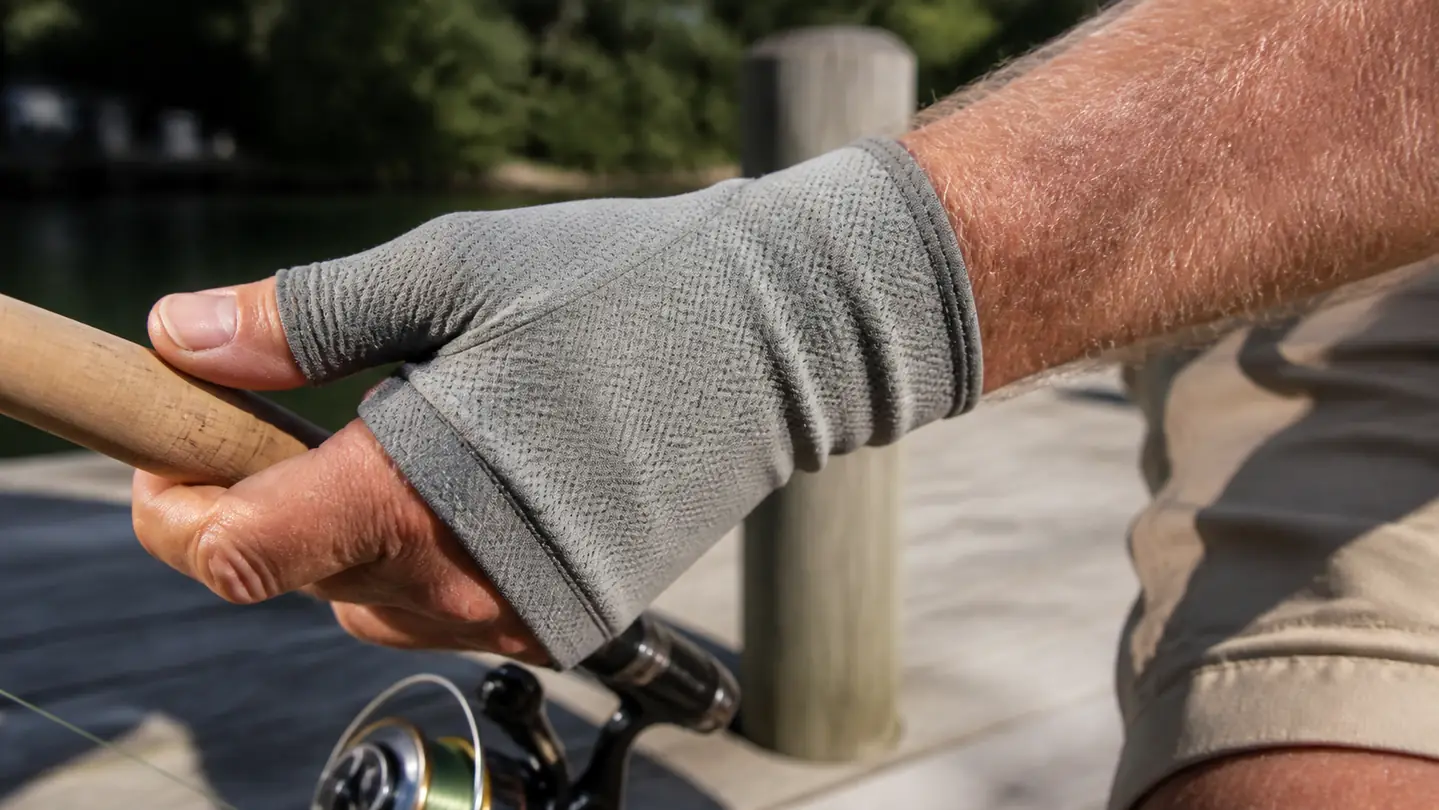
These win the job I actually do most, which is hold things. The arthritis gloves are fingerless, so my fingertips stay bare. That is not a small thing when the reason my grip fails is that my hands ache after two hours of holding the same rod. Those open fingertips mean I still feel the line when a trout breathes on it, still tie a fresh fly, still unscrew a thermos one-handed, still work a zipper on a blind without yanking it. There is a feel to a rod when your fingertips are free that no insulated pair can give you, and once you have had it you stop reaching for the fat gloves on working days.
The compression itself is the part I was most skeptical about, because it sounds like late-night television. But there is an honest mechanism at work. A snug, even layer around the knuckles and the base of the hand cuts down the swelling that shows up at the end of a long day and eases the ache while you are still in motion. I noticed it most the day I forgot them in the fall and spent the afternoon with stiff, puffy hands that would not close easy. I also noticed the seams. Cheap gloves put a seam right across the pad of the thumb that you feel every time you close your fingers. These do not, a detail I did not expect to care about and came to.
They are thin enough to wear under a pair of work gloves when I haul firewood, and they wash like socks. Wash, hang dry, back on in the morning. Nothing about them needs babying, and for a guy whose hands are in the water half the day that counts for more than any feature list. A glove that cannot take a soaking is a fair-weather tool, and fair-weather tools do not last in my boat.
If your hands ache and swell AFTER a long day of gripping, this is your pair.
Fingerless compression that lets you cast, tie and wrench all day and quiets the swelling by evening. One pair, worn until the season ends, and no batteries to hunt for.
Amazon Check Today's Price on Amazon →Where Heat Gloves Win
I am not going to rig this comparison so the compression pair wins everything, because it would not be true, and because the first twenty minutes of my day genuinely belongs to the heat. There are mornings in late fall and winter where my fingers are locked so cold I cannot get the compression pair on without it hurting. On those mornings, nothing loosens a knuckle like warmth. My heating grips are warm in a couple of minutes, and I sit on the dock bench with a coffee letting the heat work in while the sun comes up. That is real relief, and compression alone will not give it to you.
Heat also reaches places compression cannot. It drives blood to the hands and knocks back the deep cold-grip stiffness that no amount of snug fabric fixes. If your trouble is strictly a cold-morning problem, if the hands are fine once you have been up and moving for an hour, then a heat glove or a set of hand warmers is honestly the better buy. Do not let anyone sell you compression for a problem that is really just cold. I ran that experiment one Saturday in December, stepping out to the truck at first light with bare hands just to feel the difference, and it was not subtle. My frozen hands and my tired hands are two different aches, and heat owns one of them outright.
The other place heat earns its keep is the sit. When I am in a blind before light, I am not working my hands, I am just sitting in the cold, and compression does exactly nothing for that man. The heating grips keep my fingers loose enough that when the moment comes to reach for the thermos or the camera, my hands answer. That is not nothing. It is the difference between a still, patient hand and one that shoves itself in a pocket for twenty minutes first.
What About the Copper, Anyway?
If you are anything like me, you read the word copper in the name and rolled your eyes a little. I am not going to tell you the copper does magic, because I do not believe that and you would not believe me. What I will say is the compression does the real work, and the copper-infused knit has held its shape through a season of washings without pilling or stretching out at the wrists. Does the copper itself do anything? I cannot isolate it, and I would rather say so than make up a story. What I can stand behind is what the knit does, which is hold snug where it should and stay put.
What I can isolate is the fit, and fit matters more than any fiber. A glove that is too loose slides and bunches and does little for swelling. A glove that is too tight turns into a tourniquet and makes your hands go numb, which is the opposite of the point. I take a medium and they fit snug without squeezing. If you sit between sizes, go up, because a little room beats a blood-flow problem. And give yourself a couple of days to get used to the feel, the same way you would with a new pair of boots.
Who Should Buy Which
Here is the rule I have settled into after a few seasons, so you do not have to make my mistake and buy the wrong one first. If your hands ache and swell after you have been active all day, if the grip gives out on the third hour of casting, if you want something you can wear while you actually work, buy the Copper Compression arthritis gloves first. They are the everyday tool, and they will get more hours on them than anything else in your pack.
If the problem is that your hands are frozen before you even start, if that first half hour is a wall you cannot climb, then spend your money on heat. And if you are honest with yourself, most of us who still fish and hunt every chance we get will end up owning both, because a genuinely cold morning is a heat job and a long active afternoon is a grip job. There is no shame in that and no rule that says you have to pick. Neither one is going to break a man at today's prices.
One more thing I wish somebody had told me years ago. Buy the compression pair at the start of the season, while your hands are still holding up, and wear them for prevention instead of waiting until the swelling is already running the schedule. Start with an hour or two a day and build up, the way you would break in new boots. I waited until the ache was telling me when I could fish, and it took me a while to trust the gloves after that. Prevention is the part nobody puts in the marketing copy.
My frozen hands and my tired hands are two different aches, and I finally stopped asking one pair of gloves to fix both.
The Bottom Line
Neither pair, and no pair of gloves, is going to fix what decades of cold mornings and hauling gear did to these hands. I am not selling you a cure, and I would not insult you by pretending. What the Copper Compression gloves do, and what I can stand behind after a season of daily wear, is keep a tired grip steady so the rod stays in my hand and I stay out on the water. It does not make me twenty again, and I did not buy it hoping for that. That is the whole bargain for a man my age.
If I could go back, I would buy the compression pair first and the heat grips second, in that order, and skip the season I spent angry at one pair for not being the other. Most days the Copper Compression gloves are on my hands before the coffee cools. The heating grips ride in the pack for the mornings that need them. That is the honest system, and it has kept me holding a rod a lot longer than I figured I had left.
Start with the pair you will wear all day.
A fingerless compression glove that holds up through the season, eases tired, swelling hands, and leaves your fingertips free for the work that matters. Grab yours at today's price.
Amazon Check Today's Price on Amazon →