
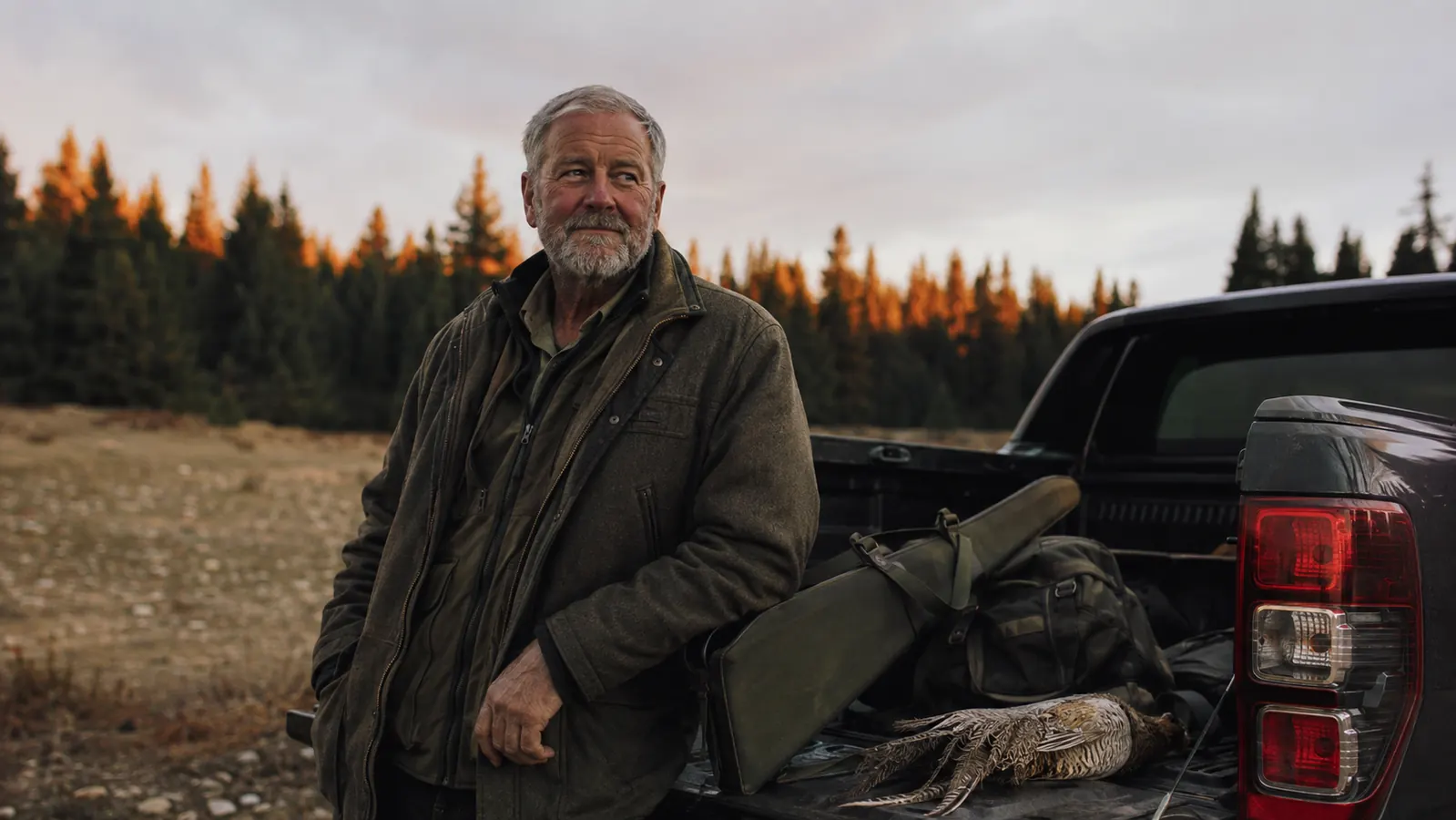
The day after a long hunt is the day my knees file their complaint. Ten hours walking a ridge, squatting behind a brush pile, dragging out a deer a quarter mile, and the next morning I pay for it just getting out of the truck. My left hip takes a full ten steps to come around, and my shoulders sit up around my ears like I'm still hauling the pack.
I used to handle it the way my grandfather did, a bottle of aspirin and a long nap. That got me to the next hunt, but it also meant I spent the first hour of every trip feeling every one of my 63 years. A couple of seasons back my youngest boy bought me a percussion massage gun for Christmas and told me to give it an honest chance. I did, mostly to keep him quiet. Two weeks later I was the one admitting it helped, and now the TOLOCO lives behind the seat of my truck.
The Gun That Loosened My Legs Before I Got My Boots Off
The TOLOCO percussion massage gun is what I reach for before I even take my boots off. Ten heads in the case, quiet enough to use while the wife reads, and it runs long enough that a full recovery pass drains less than a quarter of the battery.
Amazon Check Today's Price on Amazon →Two Things to Know Before You Turn It On
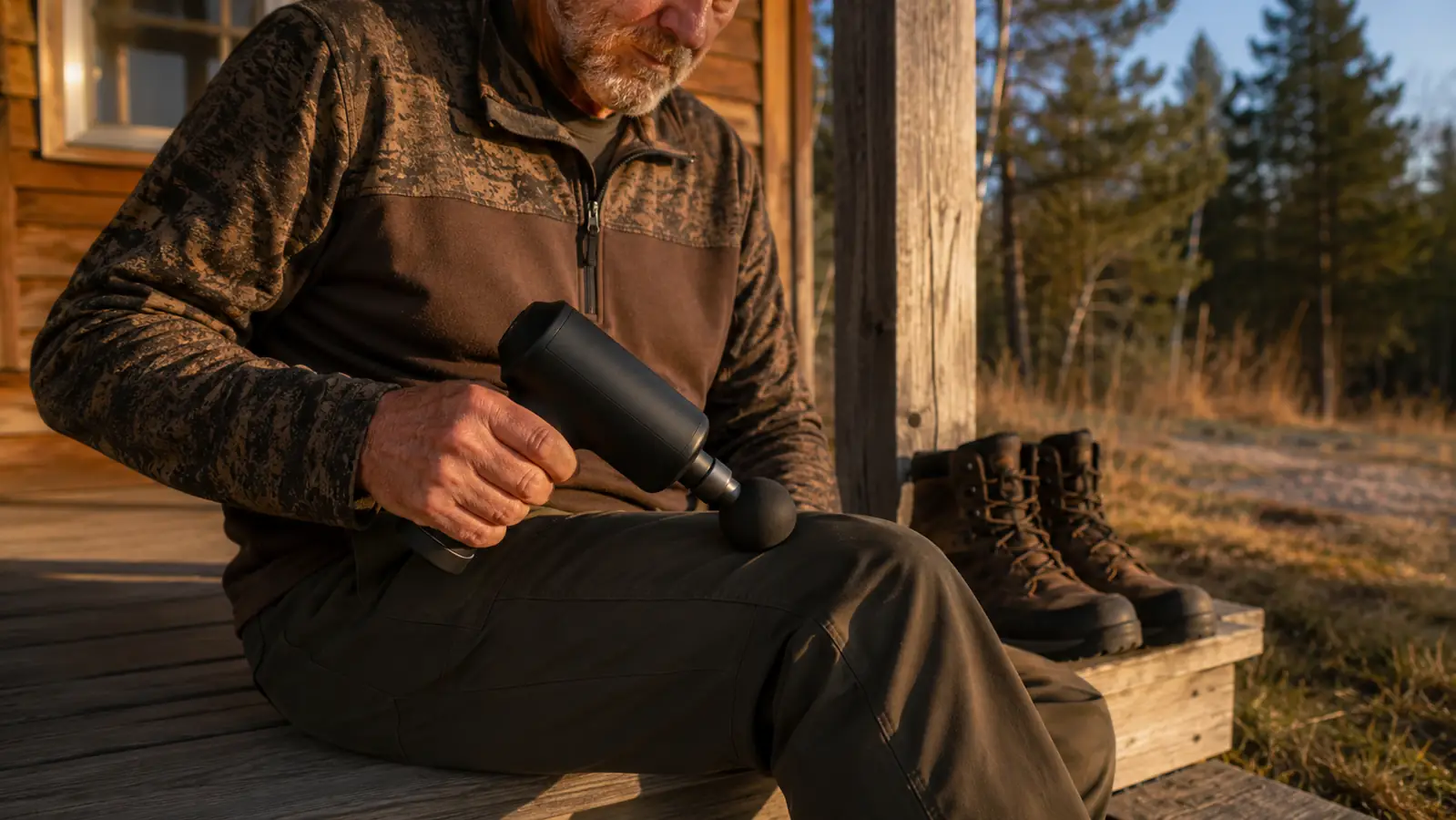
The TOLOCO comes with ten different heads in the case, and most of them stay in there. I use two, maybe three. The round ball head is my go-to for just about everything because it spreads the pressure out over a wider spot. The flat head is good for the big muscle bellies. The cone points at me from the case and I have never once found a good reason to put it on my body. It's for the stubborn spots your fingers can reach, not anything I plan to touch.
Second thing: the gun is a tool that works on muscle, not on bone or a joint that's already swollen. You keep it moving over the meat of the muscle, 30 to 60 seconds a spot, and you let the thing do the work. You don't lean into it like you're pushing a lawnmower. Start on the low setting the first few times. The TOLOCO has a decent amount of power on tap, and finding the right attachment and speed is half the battle.
Step 1: Get the Blood Moving Before You Get Specific
I do the first pass standing up, right there in the kitchen, before I even go through the mail. The point of this pass is not to fix anything, it's to wake the muscles up. I run the round head over my lower back and glutes on the low setting, sweeping side to side, about 45 seconds a side. It feels like a friendly tug, not a beating.
Stand while you do this if you can. Weight on the legs changes how the muscles feel and it gets the joints moving through their range while the gun does its part. If you've spent the day on your feet, standing for eight more minutes is nothing. You want the low back to stop feeling like a board before you move on.
One honest note here: the first week, my back was so tight after a hunt that I wanted more. Don't be me. A muscle that's been worked hard all day doesn't need a beating, it needs gentle persuading. If you drag the head across a spot more than twice without it softening, that's the signal to move on and come back to it in a day or two.
Step 2: Hips First, Because the Hips Drive Everything
Here's the thing nobody tells you about getting older and hunting: the hips are the engine and the knees are just the front tires. If my left hip is tight, my left knee complains by the third mile. So I go for the hip flexors and the glutes before I touch anything lower. The TOLOCO is easy to hold one-handed, which matters here, because I brace one hand on the counter and walk the gun around the top of the hip bone at the low-mid setting.
Stay off the bone itself. The hip bone sticks out and if you park the head right on it, it bites. You want to feel the gun working over the meat above and behind the hip, the glute on that side, then the front of the hip where the flexor runs. Two minutes on that side, switch, two minutes on the other. By the time I'm done, reaching down to lace a boot is easier.
A stool or a chair seat helps on this pass if your back is tired too. I keep a folding stool by the back door for the worst days. The point isn't the position, it's that you don't rush. I've found the hips need more time than any other spot on my body, and the gun is happy to sit in one place and thump while I stare at the windowsill and think about nothing.
Step 3: Work the Legs Where the Boots Did Their Work
Now the meat of the legs. I start above the knee and work up, because the thigh is where a day of climbing and squatting lives. I bump the TOLOCO up a setting for this pass, not to full power, just one notch, and I take my time on the quad and the hamstring on each side. If you wore waders or spent the day on one leg in a boat seat, the outside of the thigh is where the ache sets up.
Don't chase the knee. This is the hard lesson for me. The knee hurts, so I want to work on the knee, and that's wrong for a percussion gun. Knees have no muscle to work and the whole point of this pass is to loosen the muscle above and below the joint so the knee itself doesn't have to do all the adapting. I stay at least a hand's width above the kneecap and the same below it, and that's where the real relief shows up the next morning.
One more thing about the calves. The walk back to the truck is all downhill, and the calves take every step of it. I tilt the head up and run it along the back of the lower leg, low setting, a minute each side. It feels better than it has any right to, which is my technical way of saying it works.
Step 4: Shoulders and the Back of the Neck, Gentle
The shoulders take their own beating, from packing gear and from pulling against a bow or a rod all day. I use the flat head here, on the low setting, and I work the top of the shoulder and the meat between the shoulder blade and the spine. I'm not going to lie, the first time I ran it across a knot at the base of my neck I made a sound the neighbors probably heard.
Here's where a little caution earns its keep. The neck is a narrow window, and I keep the gun on the lowest setting and never move it up the back of the skull. Ten seconds on a knot, move on, come back after a minute if it needs another pass. My rule is simple: if it hurts sharp, I stop. A dull ache that slowly evens out is the target, and I've never had the neck or the shoulders complain the morning after.
If you've got a handheld tool habit like a chainsaw, or spent the afternoon casting, the forearm on that side deserves two minutes too. Ball head, low, from the elbow to the wrist along the thick muscle on the outside. I spent forty years twisting a wrench and a rod, and that pass is the one I'd never give up.
The gun is not a cure. It's what gets me loose enough to get out there again, and at my age that's all I'm asking.
Step 5: Finish Slow, Then Give It Ten Minutes on the Floor
The last pass drops back to the low setting and I go back over the big areas, glutes, quads, shoulders, about 20 seconds each, just to even everything out. Then I put the gun down and do what I never used to do: I stretch. Not fancy stretches, just ten minutes lying on the living room floor pulling my knees to my chest, one leg at a time, the stuff the physical therapist showed me ten years ago that I ignored until the gun made me remember.
The sequence matters more than any single step. Gun to get the muscles soft, stretch to get them long, water to replace what the day took. I'm not a doctor and I'm not going to play one on the internet, but I've done this after every hunt for the better part of two seasons, and the difference between the morning after and the morning when I skip it is real.
The whole routine runs about twenty minutes now, from waking the muscles up to the last stretch. When I first got the gun, I did the whole thing on the couch and called it even. Nobody learns a routine overnight, and the important part is that you do it at all, not whether you nail the order on day one.
What Else Helps
The gun does a lot, but it doesn't do everything, and I wouldn't want you thinking it will. Heat before a cold-morning hunt does more for stiff joints than any massage, so I still run a heating pad on my back for ten minutes while the coffee is going. The two work together. Gun after to relax, heat before to get loose.
Also, and this is the part nobody likes hearing, a massage gun does not replace the morning walk. The best recovery I know is getting out and moving slow the next day, half a mile, nothing fast, letting the legs warm up on their own. And drink the water. Your back and knees will remind you when you skipped it.
One thing I'll add, and it sounds counterintuitive: if tomorrow's hunt is the cold one, don't go to sleep frozen. Warm socks, a warm room, and ten minutes of the gun on the low back before bed has started my last two seasons better than any supplement. The routine is half of what this does.
When the Gun Should Stay in the Bag
Every tool has a line, and this one's worth spelling out. If something is swollen, bruised, or the pain came on sharp instead of sore, the gun stays in the bag. Fresh injuries are not for percussion, and ice is the right tool that night, not a massage gun. If you've got a history of blood clots, a bad disc acting up, or an area that's numb, run it past your doctor before you go poking around with it. I say that because I'd rather give you advice that keeps you hunting than advice that sends you to the emergency room.
And one honest thing about this whole business of getting older and hunting: no tool undoes a lifetime. The gun, the stretches, the morning walk, they all buy me the thing I actually want, which is more days in the field, not fewer. That's the whole reason I bothered to learn to use the thing right in the first place.
The Same Gun, Waiting Behind My Seat
For the money, the TOLOCO is the percussion gun I'd hand to a friend who's over 50 and still hunts every chance he gets. Ten heads, enough power to mean it, and it has taken a beating in the truck bed without complaining. If your morning after is starting to feel like a list of aches, this is where I'd start.
Amazon Check Today's Price on Amazon →